Wednesday, 25 April 2012

Dreamweaver Workshop2

//What did we determine had to be identified and analysed before designing our website?
Audience, purpose

//Limitations of web?
Typeface, colour, resolution, space


Dreamweaver uses HTML.

HTML tags:

'html' ...open html (this point onwards going to be talking in html.)
'/' ...close (end of whats been going on)
'/html' ...end of html
anything that goes in between is visible.
/body
title- put the title between the two tags
/title
head ...anything in between the head tags isn't visible but helps the design of the website
/head

Correct tag order:


<html>
<head>

<title>
</title>

</head>
<body>
</body>
</html>

can create a website using just these tags.
everything must be spelt correctly in order for it to work.
work in lower case ..avoid spaces and number

//exploring web source codes...


'...!' ..open/close html (different for different browsers)
'style' 
'div' ...division/dividers
'ul' ..un-ordered list (drop down menu)
'script'

//first create a route folder


A sub folder named 'images;


//3 views...


//Direct Dreamweaver to root folder...


//To link Dreamweaver to website


//Check it works


//SAVE


Automatically saves into root folder.


Needs to be called 'index' (all in lower case)


//Preview...


//Change name on toolbar


//Add body...


SAVE


Always appears in times unless CSS added.


different coding language...


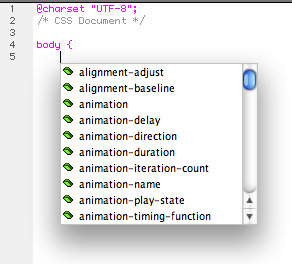
put each new attribute on a new line to make it easier to read.

SAVE as 'stylesheet'.


Link style sheet to html...


//other changes:


If reload page and it hasn't altered, need to refresh to load the new css. 

alt 3 =#


...div ID.


//embedding the background into the html


//Dividing the website

have to do positioning a float when dividing the page.
'float left/right'

DIV ID for navigation...


align each div with its close div.


//Adding an image


make image as small as possible.
do not put a solid background colour in the design, specify this is the CSS.


//embed


//can make notes that won't affect website by pressing */


//file save all

//drag onto desktop DO NOT LEAVE IN USER WORK AREA.

Bring scamp of design want to create for next week.


Tuesday, 24 April 2012

OUGD203 Part 2 Rationale


Today we had a workshop which, in the end, resulted in us producing a rationale outlining what we wanted to get from the next brief. I have realised the area of design that I want to begin to focus on and can now move forward in bringing briefs of interest to me together in order to allow me to work on one brief which incorporates all these areas of design. I think this may be fairly difficult to do as I am still interested in a fairly broad range of areas within graphic design, but I feel that with a little intuition I will be able to effectively do this. All in all, writing my own brief should provide me with the opportunity to work on design that I am truly interested in. Let the fun commence....

Analysing the Briefs

After Tuesdays session we were given the task of analysing the four briefs we had chosen to work with in order to produce our own brief. I annotated the briefs with five reasons why I chose them (what interested me) and then analysed them in relation to the list of assets I produced in my rationale.


In analysing the briefs in this way, it gave me the opportunity to truly see what each brief had to offer to me in fulfilling the rationale I had written. It also made me realise how most briefs will only fulfil certain criteria of my rationale, however, in order for my rationale to be fully fulfilled I would have to comprise my own brief. So that was my next task.


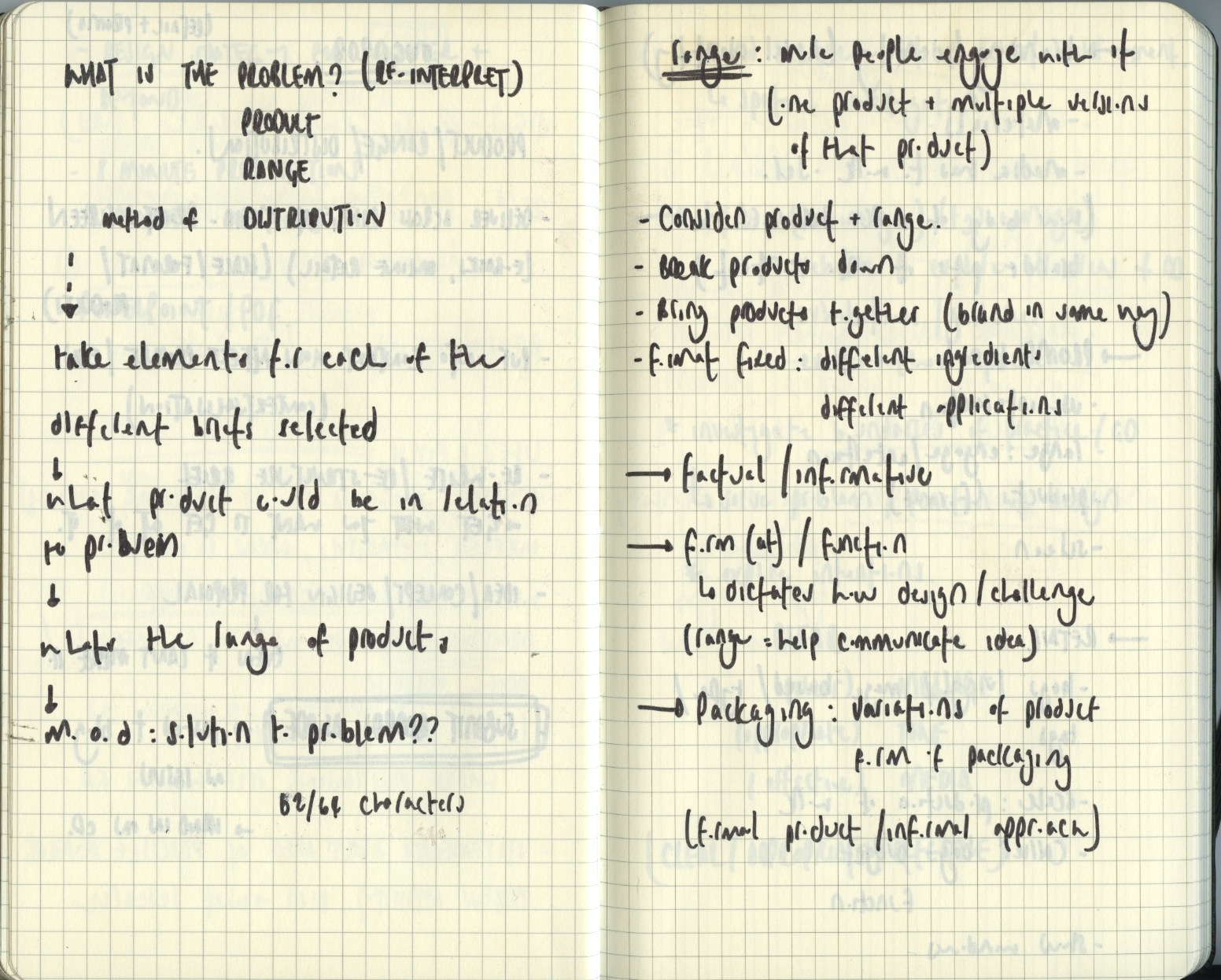
I found this rather tricky, I wasn't sure whether I should take one brief (so that I had an actual problem to solve) and then incorporate other elements from other briefs to then fulfil my rationale criteria, or whether to take parts from all the briefs and make a problem out of that. I thought the latter could become more confusing and not have context within the real world, so I chose to use the NO17 brief as the basis of my own brief but incorporate other aspects into this.

In order to ensure I was constructing a brief which met my rationale, I took one aspect from each and wrote it on a pink sticky note. I then proposed a brief which took all these aspects into consideration.
The brief I have produced is far too vague, but at this point I think having a vague idea is acceptable. We are having another session Thursday, so hopefully by then I will be able to consolidate my idea.

Monday, 16 April 2012